

Embodied Wisdom:
DESIRE.
Tidbits & Takeaways
PSWD: NX^49!j+
The perimenopausal transition can have a huge impact on your sex drive and desires, with an average of 52.4% of women experiencing sexual dysfunction during this phase and increasing to 63.6% for postmenopausal women.
Through the menopausal transition, the decline in key hormone levels contribute to the symptoms of sexual dysfunction:
Estrogen nourishes vaginal tissue, thus its decline affects moisture, elasticity, thickness and pH balance.
Progesterone promotes sleep and calm, thus its decline impacts desire and mood.
Testosterone primes desire and increases physiological sensitivity, thus its decline impacts readiness and delays responsiveness.
Oxytocin, both a hormone and neurotransmitter, promotes connection, trust, and maternal behaviours, thus its decline is associated with irritability, anxiety, and depression, contributing to decreased libido and desire for intimacy/connection.
The symptoms associated with sexual dysfunction include:
Can include a drop in desire (spontaneous and responsive), decline in sexual thoughts and fantasies, difficulty or delay in becoming aroused, or maintaining arousal (dimininshed natural lubrication and sensitivity.
❋ Decreased Libido
❋ Genitourinary Syndrome of Menopause (GSM)
More than just vaginal dryness, GSM also includes burning, itching, or irritation of the vulva, lack of lubrication, and discomfort or pain during sex. Prescription vaginal estrogen is recommended. Non-hormonal srategies include vaginal moisturizers and pelvic floor physiotherapy. Plenty of lubricant is a MUST!
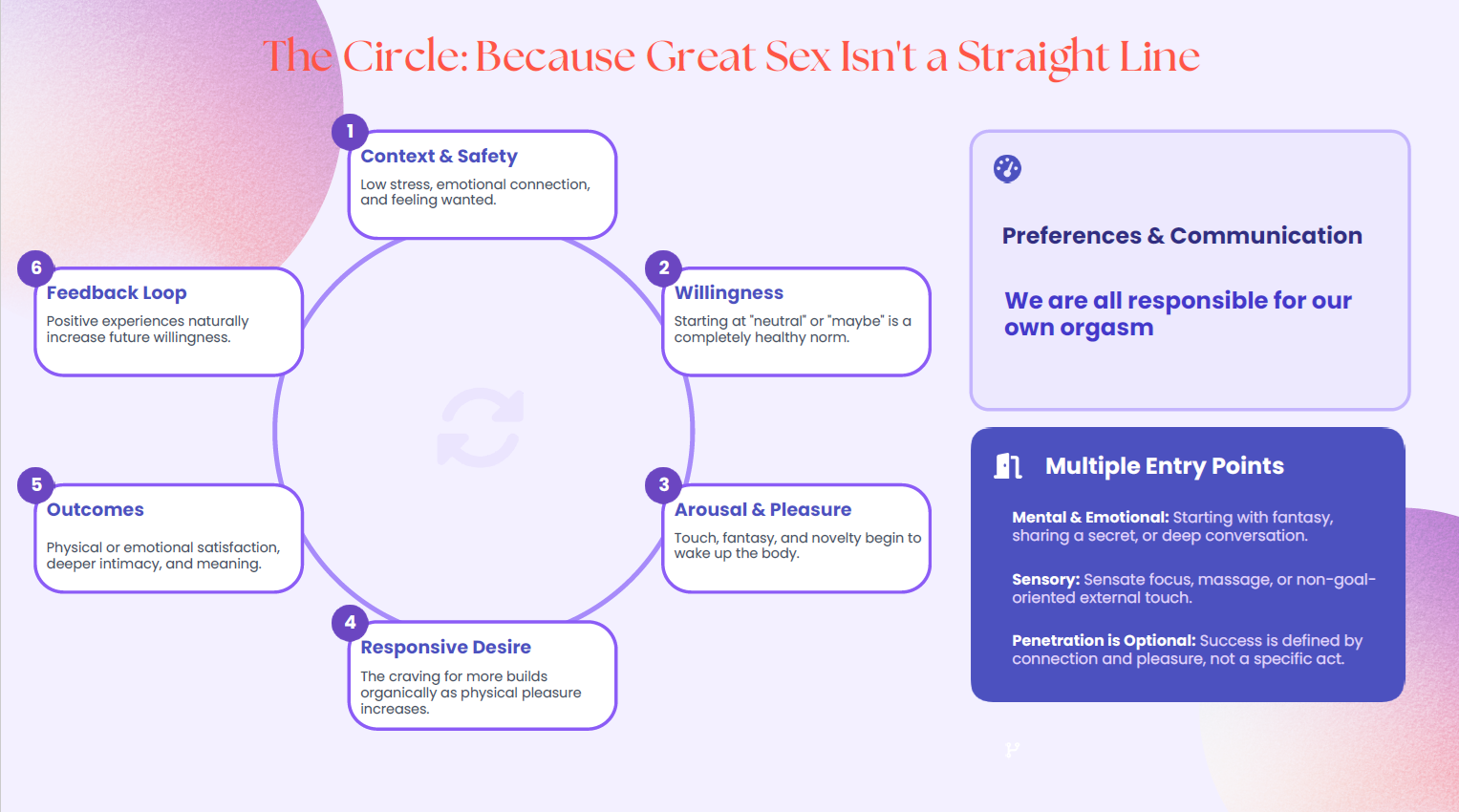
Frances described beautifully the difference between spontaneous and responsive desire, brought to the mainstream of sex education by Emily Nagoski (watch her TEDTalk for more). Generally speaking most women experience desire as a response to a variety of social, emotional, and physical stimuli, such as connection, conversation, and physical touch. Desire can be stymied by the plethora of peri/menopausal symptoms such as vasomotor symptoms (hot flashes), irregular menstrual cycles, irritability, mood swings, anxiety, depression, sleeplessness and fatigue, negative body image, etc., along with relational issues such as mental/emotional load discrepancy. As Emily Nagoski emphasizes, the keys to great sex are confidence and joy (watch another of her TEDTalks here).
❋ Desire Discrepancy
❋ REMEMBER: Each partner is responsible for their own orgasms!
Peri/menopause, for the hormonal and physiological factors already mentioned, can usher in delay, absence, or infrequency of orgasms, and diminish orgasm intensity. This factor, when coupled with decrease in stimulation and lubrication, contributes to an overall dissatisfaction in sex.
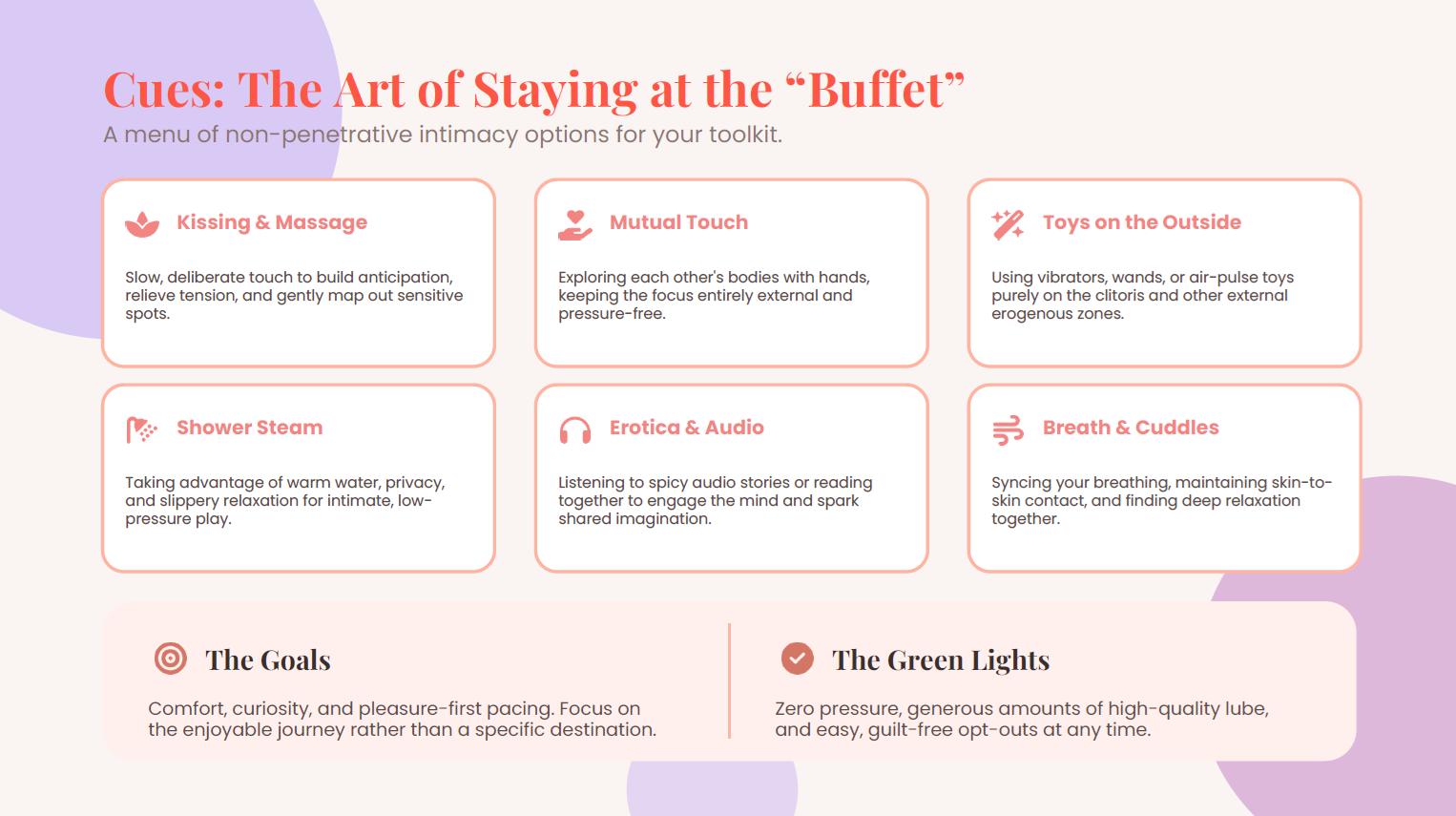
❋ Recommendations to increase pleasure include:
plenty of lube, always
hard STOP when pain occurs
redefining sexual play and intimacy (choose from The Buffet - image below)
stock up on toys and use them in partnered and solo play
avoid penetrative sex and pivot to alternatives (outercourse!)
see a physician/naturopathic doctor; discuss vaginal estrogen and other options
❋ Orgasm Intensity & Dissatisfaction
ESSENTIAL RESOURCES

Journal Prompts
What gets in the way of your pleasure?
What do you desire most?
What are you not asking for in regards to your pleasure?
Tools
Frances’ Slide Presentation (pdf) I recommend perusing her presentation for many more tidbits, takeaways, and tips!
Frances’ comprehensive list of resources including books, videos, and documentary films (pdf)

More Resources
Additional Info from The Menopause Society:
Podcast Episodes
“The Sex Education You Never Got w. Dr. Maureen Slattery” on The Feminine Rebellion Podcast
“How to Approach Sex in Menopause w. Dr. Sonja Wright” on The Menstruality Podcast
PSWD: NX^49!j+

Featured Facilitator:
Frances Kinloch, RCC
Frances Kinloch is a Registered Clinical Counsellor with BCACC and a certified Sex Therapist with the American Association of Sex Educators, Counsellors and Therapists (AASECT) based in Victoria, BC, who brings a uniquely intersectional and heart-centred perspective to discussions on menopause. Her approach to this life stage is informed by a Master of Arts in Counselling Psychology and advanced training in sex therapy, including certifications from the University of Guelph and the Institute of Sex Education and Enlightenment.
As a presenter, Frances draws on a rich tapestry of therapeutic modalities, including attachment theory, Acceptance and Commitment Therapy (ACT), the Developmental Model, and Relational Life Therapy (RLT) to explore the multidimensional experience of menopause for bodies and relationships. She examines not only the physical and relational shifts but also the cultural narratives surrounding this transition. Her feminist and anti-oppressive lens invites audiences to consider how identity, privilege, and societal expectations shape the menopausal experience.
To invite transparency for all, Frances locates her intersections; she is a white Scottish settler, cisgender, bisexual, straight-passing mother of two. She presents not as an expert standing apart, but as a fellow peri-menopausal traveller, a "constant work in progress" committed to examining her own biases and creating spaces where authentic, compassionate conversation about menopause can unfold.
Sources
Khani, S., Azizi, M., Elyasi, F., Kamali, M., & Moosazadeh, M. (2021). The prevalence of sexual dysfunction in the different menopausal stages: A systematic review and meta-analysis. International Journal of Sexual Health, 33(3), 439–472. https://doi.org/10.1080/19317611.2021.1926039
Winterich, J. A. (2003). Sex, menopause, and culture: Sexual orientation and the meaning of menopause for women’s sex lives. Gender & Society, 17(4), 627–642. https://doi.org/10.1177/0891243203253962