
MOVE & WRAP UP.
Embodied Wisdom:
Tidbits & Takeaways
PSWD: !Nc3f%nG
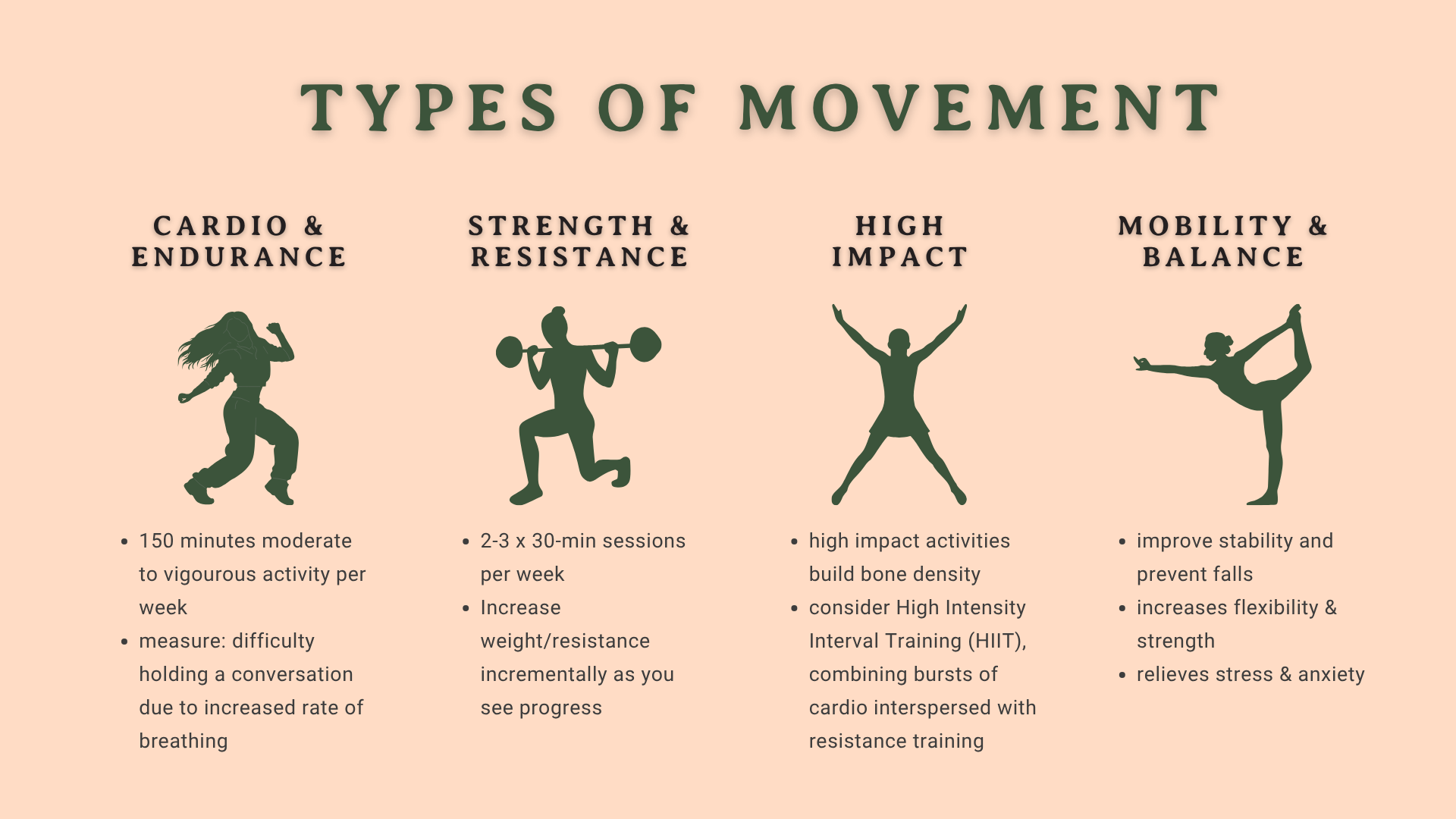
According to research, exercise actually mimics the effects of estrogen, providing relatively low-cost, low-barrier, and non-pharmaceutical solutions to improve sleep, relieve stress, regulate metabolism, and protect against heart disease and osteoporosis. Currently, research does not demonstrate exercise having a positive impact on vasomotor symptoms, but plenty of evidence supports exercise to relieve symptoms related to anxiety and depression, which exacerbates hot flashes and night sweats. Across the board, women who are physically active report fewer menopausal symptoms, better mental health, and improved quality of life.
Physical activity improves cardiovascular and respiratory function. Exercise lowers the risk of heart attack, heart disease, hypertension, stroke, and diabetes, which are all risk factors for women in the menopause transition.
❋ Cardiovascular Health
Exercise improves our ability to cope with daily stressors, boosts self-esteem, reduces psychological distress, and improves mood. Somatic activities like shaking, tapping, audible groans and sighs, rocking, and thumping mimic the stress release cycle, helping to move the effects of stress out of the body.
❋ Stress Release
Regular physical activity promotes fatigue, which contributes to better quality sleep. It also decreases stress and anxiety and improves self-confidence, making it easier to fall asleep by alleviating some barriers that interfere with our ability to rest our minds. Women who exercise regularly also report fewer depressive symptoms, which contributes to insomnia and poor sleep quality.
❋Sleep
Women in the peri/menopausal transition can experience sarcopenia, or a gradual reduction in muscle mass. Strength training stimulates muscle growth and improves strength by creating a mechanical load that galvanizes bone structure and slows bone loss. This helps to prevent osteoporosis and also contributes to building our resilience to cope with everyday strength challenges like carrying groceries and supporting our kids, grandkids, and elders to move safely.
Additional info from The Menopause Society: Menopause & Osteoporosis (PDF)
❋ Bone Density & Muscle Strength
As both Aabha and Lorelei emphasized in their presentations, the functionality of our bodies should be our main priority, which promotes regulation of metabolism during the peri/menopausal transition. As so many women report distress as a result of weight gain and body changes, regulating metabolism is a key factor in stabilizing weight. Exercise prevents metabolic syndrome, which is defined as a group of conditions that include high blood pressure, high blood sugar, excess abdominal fat, and high cholesterol that can increase risk of heart disease and diabetes.
❋Metabolism
Essential Resources
Journal Prompts
What moves you?
What activities used to light me up? How did I FEEL when I engaged in these activities?
How will you rewrite your own story as you move through this sacred transition?
What will you embrace?
What will you release?
Tools
From Herstasis:
Online Fitness Resources to Supplement Your Yoga Practice
The Class: Cardio, HIIT, and strength training, described as a “music-driven somatic workout”. If the nervous system regulation and embodiment of yoga were to be infused into the intensity of HIIT class, it would result in this. Instructor Aimee Cox hosts a menopause series that is fulsome and inspiring. I love engaging in the chat before live classes - I have met folks that I “see” regularly and it feels very community-oriented. Here is a sample class on YouTube with one of my favourite instructors, Mallory Meeks. For a free 30-day trial, use this link.
G School (formerly Bellyfit with Alice Bracegirdle): As Alice has embraced her identity as a mid-life menopausal maven, she has evolved the once cardio-driven focus of Bellyfit (which blended belly dance and other sacred feminine movement styles with aerobics) into an intentional movement practice that celebrates sensuality, strength, and Shakti energy for women in their 40s and beyond. Alice hosted an extensive menopause series, “The Grand Initiation” that brought together a posse of experts in the physical fitness and spiritual realms; the supplemental workouts are available with a very affordable subscription to G School.
Videos & Podcasts
Muscle Your Way Through Midlife, Menopause and Beyond | Laurena Law | TEDxTinHauWomen
How menopause affects the muscles, bones & joints | Mitushi Ajmera | TEDxGreenfield Women
Menopause, Muscle, & Metabolism | What Every Woman Over 35 Must Know w. Dr. Mary Claire Haver (Podcast: All About You | Dr. Shauna Watts) *They talk about the benefit weighted vests (FYI: sponsored by Ruksak)!
PSWD: !Nc3f%nG
Rewriting the Story
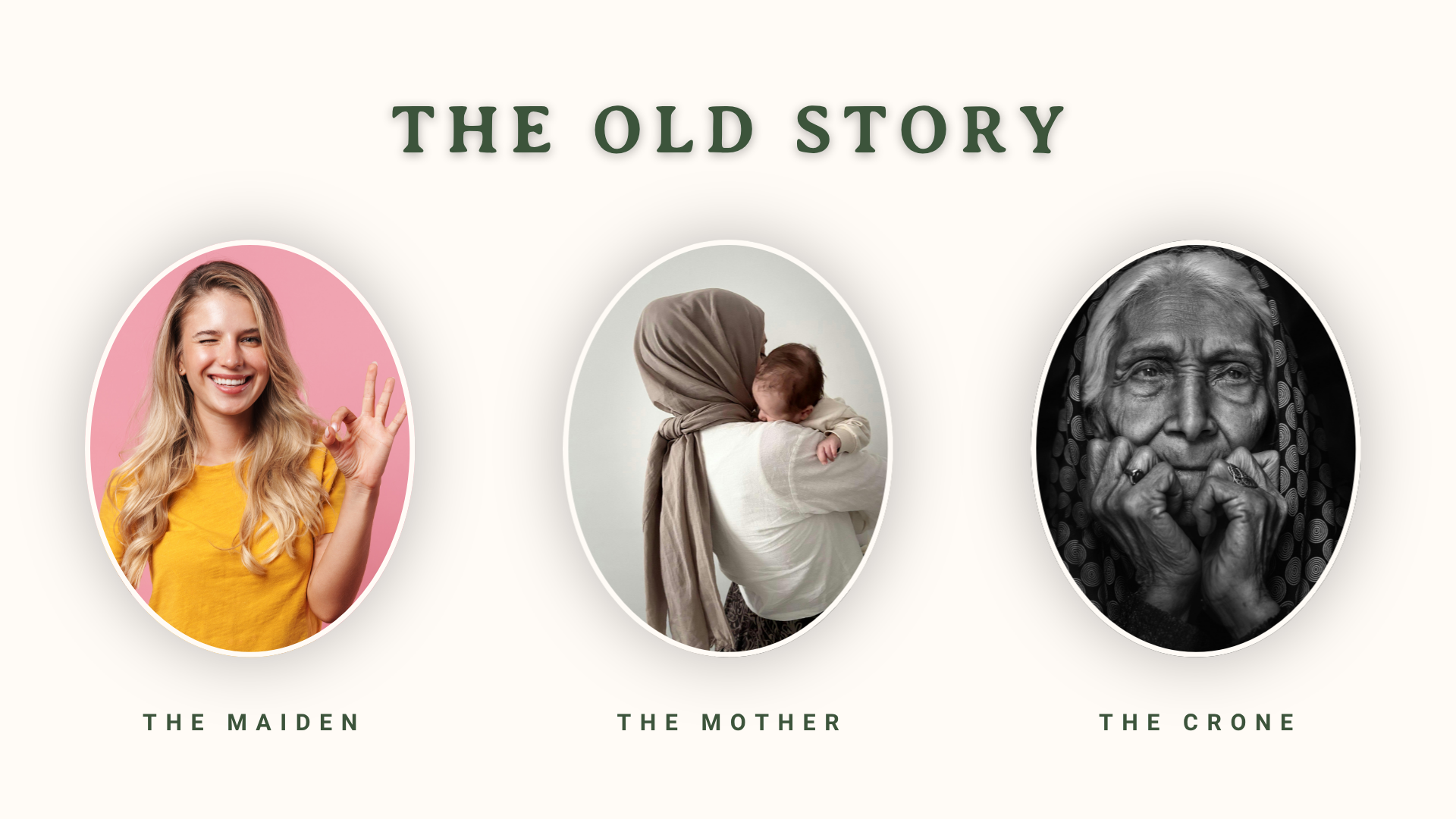
Worth noting about The Old Story:
Much focus is directed to the Maiden archetype; youth is celebrated; typical beauty standards tend to be based on women who are young, white, thin, abled, cisgendered femme. She appears full of life and joy, signified with a bright technicolour disposition.
The Mother archetype is focused on nurturing, selflessness, sacrifice; her purpose is reproduction and productivity; her invisibility is normalized and celebrated. Her identity is defined by her relational duty to her child, constantly putting her needs last. She is shrouded in muted colours with her child as the focus.
The Crone archetype is portrayed as decrepit, saddened, grizzled, often appearing in layers of rags. She is often associated with witchcraft and sinister mystery, an enigma now that she no longer can bear children. She is devoid of all colour, all vitality. She is the last step before certain death.
What is missing from The Old Story? Where are the women who did not bear children? Where are the women who occupy the space between The Mother and The Crone? Where are WE represented?
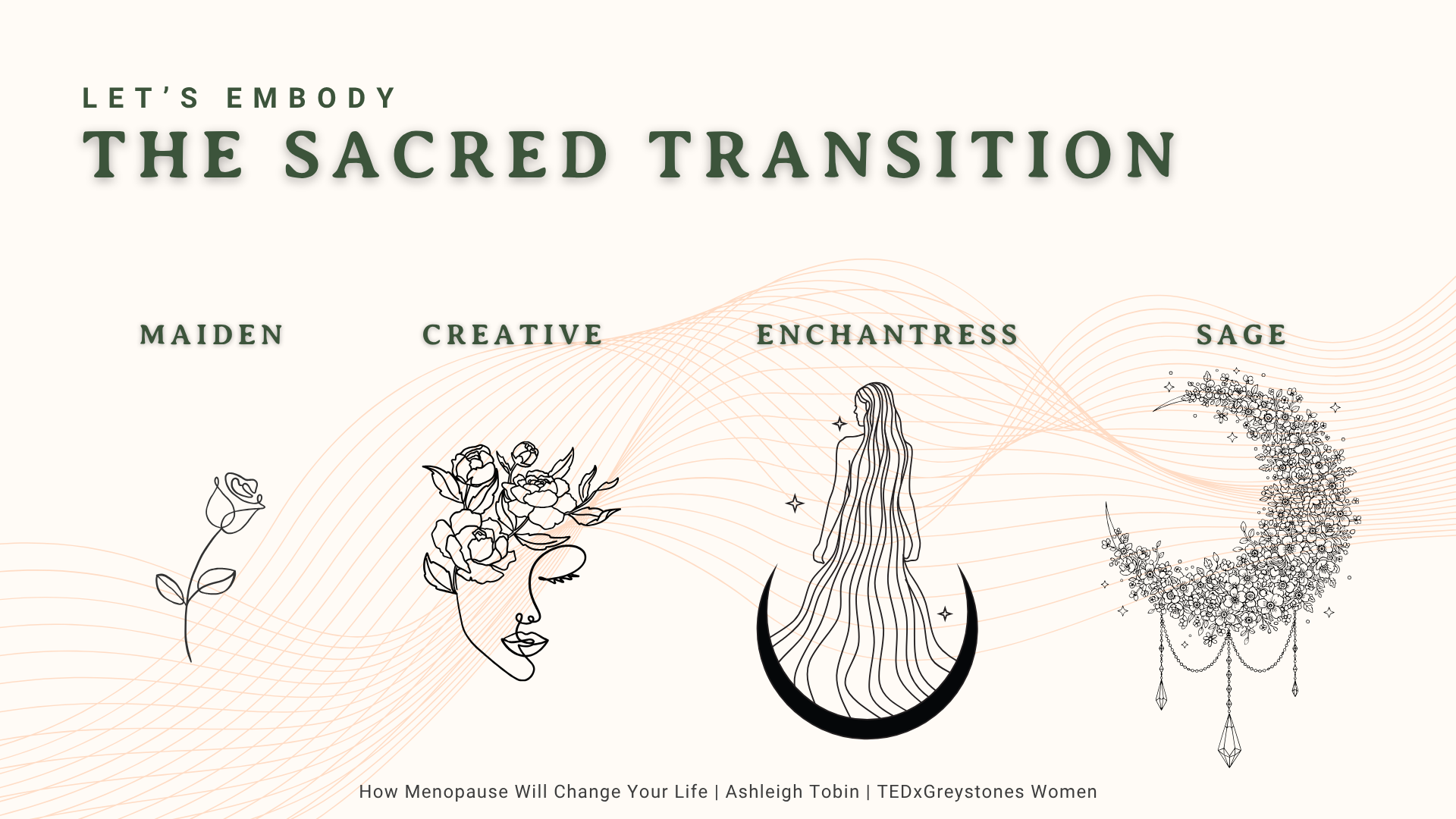
What if we could write A New Story?
Ashleigh Tobin, in her TEDTalk How menopause will change your life, proposes a new paradigm. The Maiden embodies curiosity, voracity, playfulness, and pure potential.The Creative embodies contribution, innovation, ingenuity, and yes, perhaps her offspring to the benefit of the world around her.The Enchantress embodies spell-weaving, change-making, cycle-breaking, boundary-building, bullsh*t-calling, justice-enforcing, shelter-giving, path-illuminating, dream-reviving, legacy-founding. The Sage embodies wisdom, storytelling, firekeeping, grandmothering the generations to come.
Some final fun…
When I am feeling nostalgic for my younger years, I remind myself of that one time I was featured in a fitness video (the full workout is still available on G School - you will need a subscription to access)… I remind myself how much I still love moving to music, getting my sweat on, and connecting to a community of women who inspire me. In this same spirit, my hopes for Embodied Wisdom was to continue to reconnect and explore the perimenopausal journey together. Thank you for joining me.
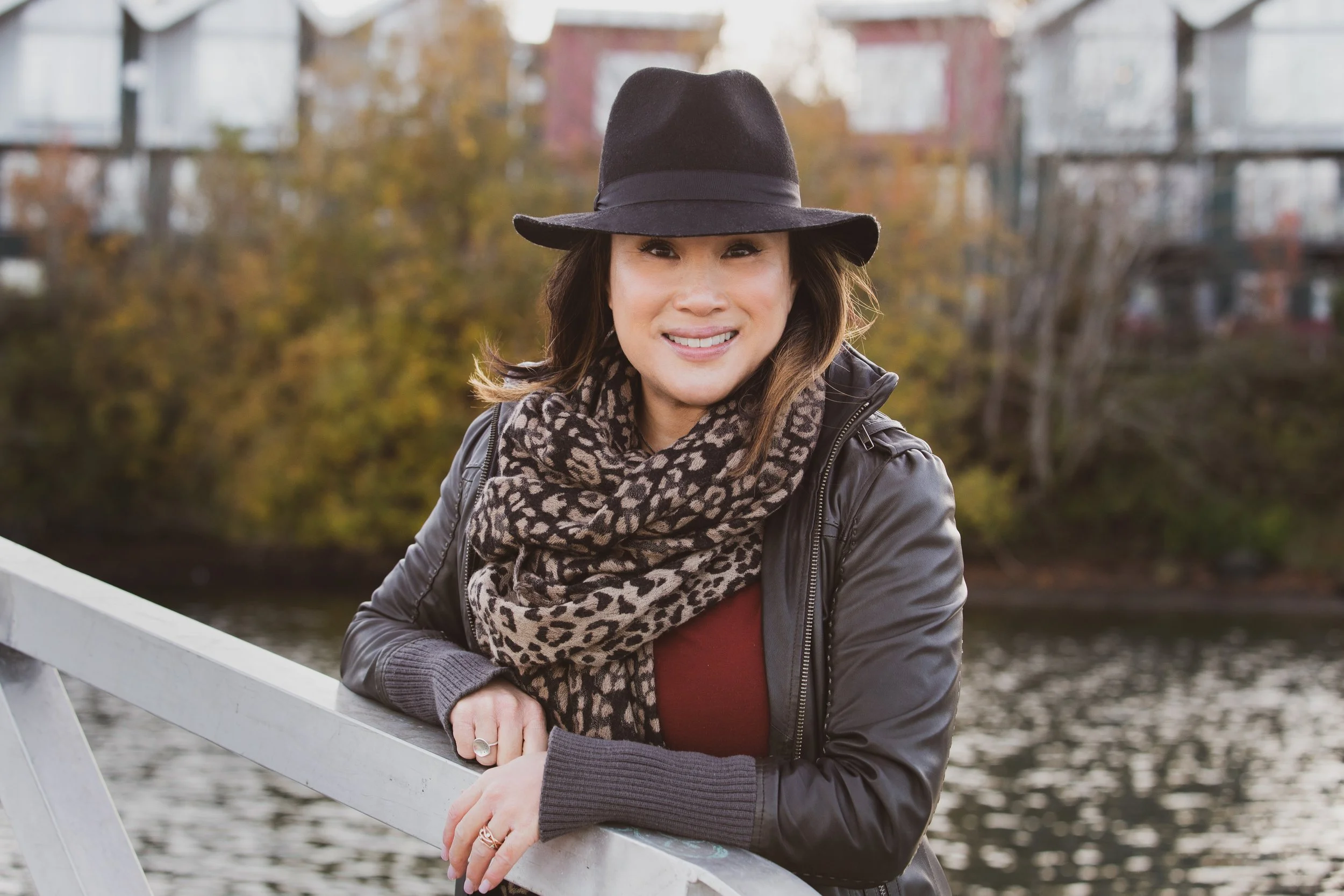
Featured Facilitator:
Andrea Ting-Luz,
Clinical Counsellor
I walk in the world as a perimenopausal, cisgender, heterosexual female, a once-divorced and twice-married spouse, an acculturated person of colour, a first-generation child of Chinese-Filipino-Spanish immigrants, an unapologetic feminist determined to include the masculine in the conversation, a staunch ally of the queer and trans community, and an activist committed to disrupting the cycles of violence and intergenerational trauma.
I am a Clinical Counsellor and Yoga Instructor (MACP, RCC - Qualifying, ERYT-500), who earned a Master’s in Counselling Psychology (MACP) with honours from Yorkville University in 2026. I am currently finalizing accreditation as an Registered Clinical Counsellor (RCC) from the British Columbia Association of Clinical Counsellors (BCACC).
I provide counselling services to individuals and couples with a fcous on adults undergoing momentous transitions and related discomfort including peri/menopause, sleeplessness, anxiety, empty-nesting, retirement, career transition, divorce/separation, new love, grief and loss. I benefit from the supervision of BCACC member Frances Kinloch, RCC.
Sources
Denche-Zamorano, Á., García-Paniagua, R., Pastor-Cisneros, R., Pereira-Payo, D., & Pérez Gómez, J. (2024). Influence of physical activity level and perceived social support on mental health and psychological distress in women with menopause problems. Psychology, Health & Medicine, 29(8), 1493–1511. https://doi.org/10.1080/13548506.2024.2347522
Gunter, J. (2021). The Menopause Manifesto: Own your health with facts and feminism. Citadel Press.
Haver, M. C. (2024). The new menopause: Navigating your path through hormonal change with purpose, power, and facts. Rodale Books.
Haver, M. C. (2026). The new perimenopause: an evidence-based guide to surviving the zone of chaos and feeling like yourself again. Rodale Books.
Ruiz-Montero, P. J., Marín-Jiménez, N., Borges-Cosic, M., & Aparicio, V. A. (2021). Association of objectively measured physical fitness with health-related quality of life of mid-life women: the FLAMENCO project. Climacteric, 24(3), 282–288. https://doi.org/10.1080/13697137.2021.1879778