
Embodied Wisdom:
REST.
Tidbits & Takeaways
PSWD: nX7%Yn&Y
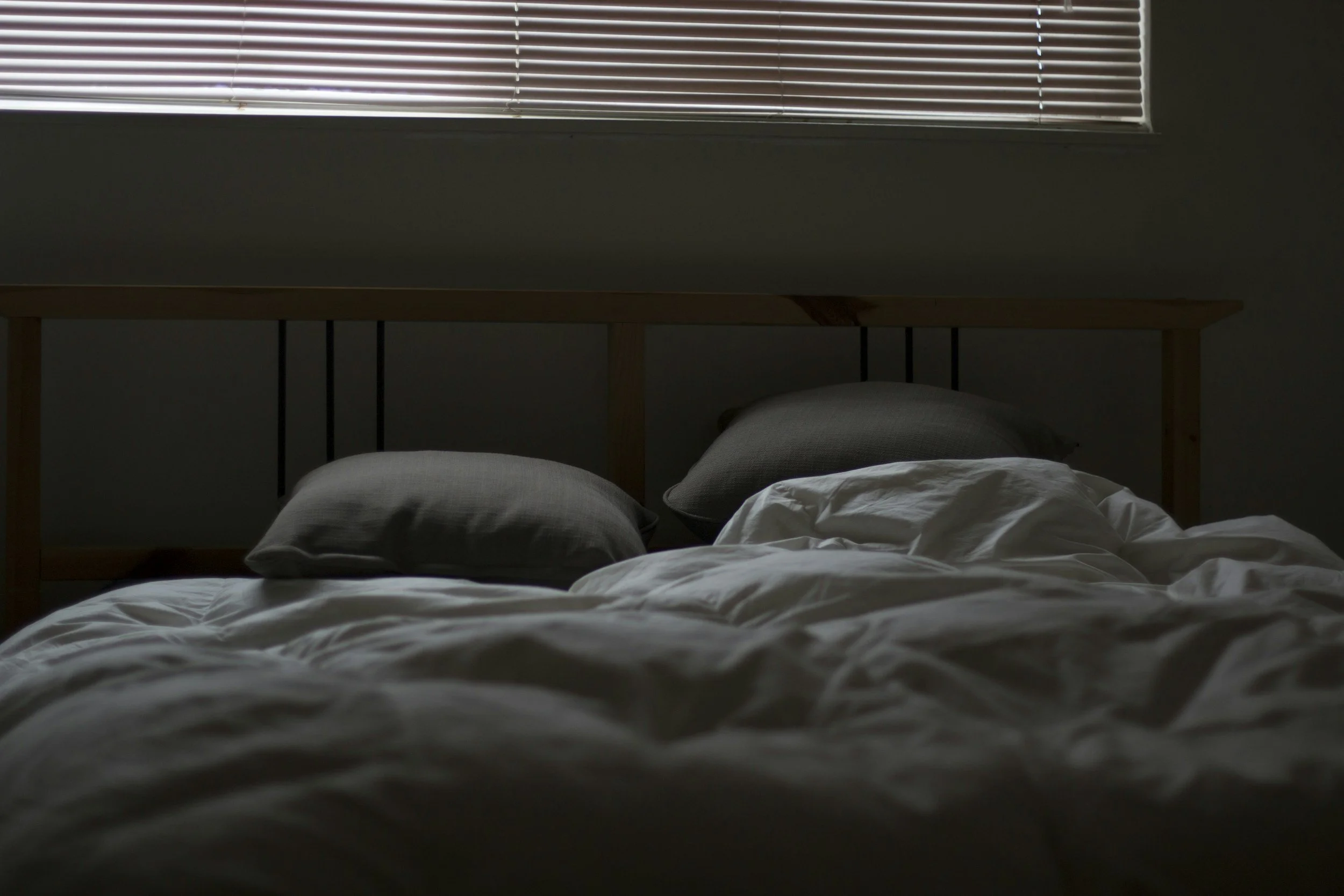
But first, we must REST. There is a reason this workshop begins with rest. All our perimenopausal stressors feels less tolerable when we are sleep deprived. Of the many perimenopausal symptoms impacted by the decrease in estrogen, one of the most commonly experienced (reported by up to 47% of women) is trouble falling or staying asleep, caused by the dysregulation of serotonin, a neurotransmitter that affects mood and sleep . Poor sleep and insomnia are associated with increased depression and anxiety for those in the menopausal transition. For many of us who experience anxiety, we experience the vicious cycle wherein anxiety impacts sleep, while lack of sleep in turn increases anxiety.
Factors and symptoms that impact our ability to sleep include:
a drop in melatonin production leading to trouble falling and staying asleep
increased stress and anxiety leading to rumination
hot flashes/night sweats disrupting sleep and interfering with our ability to fall back to sleep
decreased tolerance for alcohol impacting sleep quality
Practices
In moments of extended wakefulness, it is agonizing to calculate how little sleep you are getting. Shifting your mindset to “I am priortizing my rest” can help to ease this pressure and create mental distance from the racing thoughts.
If sleep is elusive, consider getting out of bed to engage in restful activities:
restorative yoga
crossword or jigsaw puzzles
listen to guided meditations, yoga nidra, or sleep stories
progressive muscle relaxation (download my guided PMR here)
❋ Prioritze REST over sleep
If you are plagued with night sweats, prepare a back-up set of pajamas and sheets to help minimize the disruption
Keep your bedroom cool by opening windows, turning on a fan or air conditioner, and choosing bedding made with natural fibres like cotton or linen
If you share a bed with your partner, invest in wax earplugs for better sound blockage and if necessary and practical, consider preparing an alternate bed to escape to
Limit blue light activity (i.e. screens) at least one hour before bedtime
❋ Prepare your environment
Cognitive Behavioural Therapy for Insomnia (CBT-I), the current gold standard to alleviate sleep disturbances for peri/menopausal women, suggests the following consistent routines, practiced daily:
engage in a calming self-care ritual that signals that it time for bed: a bath or shower, wash your face, sit for a short meditation, note your daily gratitudes or glimmers, etc.
if you take magnesium and/or progesterone, take them both before bed as both promote a sedative effect
go to bed when you are tired, but not before to reduce tossing and turning
wake up at the same time every day, regardless of weekday or weekend
restrict activities in bed to include only sleep & sex to avoid associating your bed with activating activities like watching TV, scrolling social media, reading, working, etc.
get out of bed as soon as you wake up to limit time in bed for sleeping only
❋ Ritualize bedtime
Cultivate a daily habit of Constructive Worry Time (download complete instructions and a template here):
at least 2 hours before bedtime, take 20-30 minutes to review the unfinished business of your day
write down the issues that you are still trying to resolve
write down one solution or the next step - whatever is reasonable to tackle tomorrow
To minimize ruminating thoughts while trying to fall asleep:
❋ Address stress
Take moments throughout your day to alleviate stress and regulate your nervous system:
breath practices (box breath, alternate nostril breathing)
awareness practices (5-4-3-2-1, savouring, noticing glimmers)
moving or seated meditation
go outside
somatic movements (rocking, shaking, tapping, swaying)
❋ Mindful moments
Engaging in exercise for at least 30 minutes per day helps to disperse dysregulation and boost endorphins that will help to foster deeper sleep. Try to engage in exercise at least 2-3 hours before bedtime to avoid overstimulation. Other benefits include:
regulates the body’s circadian rhythym
increases production of adenosine that promotes sleepiness
relieves stress & anxiety and improves mood
regulates body temperature
promotes fatigue, leading to deeper rest
❋ Expend energy
Essential Resources

Journal Prompts
What would it feel like to be truly rested?
How would you choose to spend your energy if you felt rested?
What is one habit that you can control that would enhance to your ability to rest?
What activities help you to feel rested?
Constructive Worry Sheet (PDF)
Guided Progressive Muscle Relaxation with Andrea (M4A audio file)
Presentation Slides (PDF)
Tools

More Resources
From The Menopause Society:
TEDTalks
Sleep Stories & Meditations
Nothing Much Happens (Spotify)
Calm Sleep Stories (App)
Yoga Nidra & Beyond (Spotify)
Insight Timer (App)
Angela’s Sleep Meditation on Insight (App)
PSWD: nX7%Yn&Y
Featured Facilitator:
Andrea Ting-Luz
Clinical Counsellor
I walk in the world as a perimenopausal, cisgender, heterosexual female, a once-divorced and twice-married spouse, an acculturated person of colour, a first-generation child of Chinese-Filipino-Spanish immigrants, an unapologetic feminist determined to include the masculine in the conversation, a staunch ally of the queer and trans community, and an activist committed to disrupting the cycles of violence and intergenerational trauma.
I am a Clinical Counsellor and Yoga Instructor (MACP, RCC - Qualifying, ERYT-500), who earned a Master’s in Counselling Psychology (MACP) with honours from Yorkville University in 2026. I am currently finalizing accreditation as an Registered Clinical Counsellor (RCC) from the British Columbia Association of Clinical Counsellors (BCACC).
I provide counselling services to individuals and couples with a fcous on adults undergoing momentous transitions and related discomfort including peri/menopause, sleeplessness, anxiety, empty-nesting, retirement, career transition, divorce/separation, new love, grief and loss. I benefit from the supervision of BCACC member Frances Kinloch, RCC.

Sources
Denche-Zamorano, Á., García-Paniagua, R., Pastor-Cisneros, R., Pereira-Payo, D., & Pérez Gómez, J. (2024). Influence of physical activity level and perceived social support on mental health and psychological distress in women with menopause problems. Psychology, Health & Medicine, 29(8), 1493–1511. https://doi.org/10.1080/13548506.2024.2347522
Kalmbach, D. A., Cheng, P., Arnedt, J. T., Anderson, J. R., Roth, T., Fellman-Couture, C., Williams, R. A., & Drake, C. L. (2019). Treating insomnia improves depression, maladaptive thinking, and hyperarousal in postmenopausal women: Comparing cognitive-behavioral therapy for insomnia (CBTI), sleep restriction therapy, and sleep hygiene education. Sleep Medicine, 55, 124–134. https://doi.org/10.1016/j.sleep.2018.11.019
Lee, D. Y., Andreescu, C., Aizenstein, H., Karim, H., Mizuno, A., Kolobaric, A., Yoon, S., Kim, Y., Lim, J., Hwang, E. J., Ouh, Y.-T., Kim, H. H., Son, S. J., & Park, R. W. (2023). Impact of symptomatic menopausal transition on the occurrence of depression, anxiety, and sleep disorders: A real-world multi-site study. European Psychiatry : The Journal of the Association of European Psychiatrists, 66(1), e80. https://doi.org/10.1192/j.eurpsy.2023.2439
Monfaredi, Z., Malakouti, J., Farvareshi, M., & Mirghafourvand, M. (2022). Effect of acceptance and commitment therapy on mood, sleep quality and quality of life in menopausal women: a randomized controlled trial. BMC psychiatry, 22(1), 108.
Ntikoudi, A., Owens, D. A., Spyrou, A., Evangelou, E., & Vlachou, E. (2024). The effectiveness of cognitive behavioral therapy on insomnia severity among menopausal women: A scoping review. Life (2075-1729), 14(11), 1405. https://doi.org/10.3390/life14111405
Proserpio, P., Marra, S., Campana, C., Agostoni, E. C., Palagini, L., Nobili, L., & Nappi, R. E. (2020). Insomnia and menopause: a narrative review on mechanisms and treatments. Climacteric, 23(6), 539-549.
Troìa, L., Garassino, M., Volpicelli, A. I., Fornara, A., Libretti, A., Surico, D., & Remorgida, V. (2025). Sleep disturbance and perimenopause: A narrative review. Journal of Clinical Medicine, 14(5). https://doi.org/10.3390/jcm14051479