

Embodied Wisdom:
THINK. FEEL.
Tidbits & Takeaways
PSWD: +o@sPf0r
You’ve had it. You haven’t been “feeling quite like yourself.” You walk into a room and draw a complete blank as to why you are there. You become fully enraged by an ordinary stressor. The tears flood your eyes without warning. Your baseline anxiety seems to have accelerated. You feel overwhelmed and can’t seem to make decisions. The people you love seem to be irritating you more than usual. You feel a deep sense of loss now that you are aging beyond your reproductive years.
It’s no secret that anxiety and depression go hand in hand. In peri/menopause, these co-occur at a rate of 85-90%. Both insomnia and hot flashes contribute to increased anxiety, while anxiety contributes to insomnia and hot flashes (what a win-win!). Poor sleep also increases the occurence of depression by 10x. As previously discussed, some ways to address A&D include constructive worry time, regular exercise, mindfulness practices, connection to support network (friends, partner, therapist), journalling, and practicing gratitude.
❋ Anxiety & Depression
Brain fog is described as not a singular symptom but can include impaired focus, trouble concentrating, scattered thoughts, slow reaction, indecision, and memory trouble, affecting up to 60% of women. Cognitive issues demonstrate links to insomnia, fatigue, and hot flashes. For those with ADHD, these cognitive symptoms can be exacerbated exponentially (see below for two great videos on the co-occurence of menopause & ADHD). Brain functioning is shown to be improved by good nutrition and regular exercise, and avoiding alcohol and recreational drugs. Self-care practices are crucial, such as mindfulness & self-compassion, spending time in nature, journalling, gratitude practices, and taking up creative practices. Dr. Jen Gunter reassures us that many women regain brain functioning after the transition into post-menopause!
❋ Brain Fog
The peri/menopausal stage tends to fall during the time in our lives when we are most in demand. We may have children or teens (meaning that the entire family may be going through intense hormonal changes). We may be caring for aging parents. We may be at the peak of our careers. For those in heteronormative relationships, we may be coping with male partners’ lack of knowledge or empathy about the perimenopausal transition, and we may also be dealing with a long-term discrepancy in the mental/emotional load that has now reached it’s boiling point. All that to say that this time is fraught with stressors that are unrelated to hormone changes, but are certainly exacerbated by them. As such, this is the time to develop skills around effective communication, boundary setting, and asking for help. This is also a time to seek mental health support and invest in the micro, mezzo, and macro levels of self-care.
❋ Stress & Overwhelm
❋ Mood Swings
As with other cognitive & psychological symptoms of peri/menopause, emotional symptoms such as mood swings and rage are linked to hot flashes, poor sleep, increased stress, brain fog, and fatigue. About 50% of women report experiencing intense emotions, citing the seeming lack of control to be the most troubling factor. Again, these emotional symptoms have shown to return to your pre-menopausal baseline in the years following the final menstrual period. Coping strategies are aligned with the methods described above.
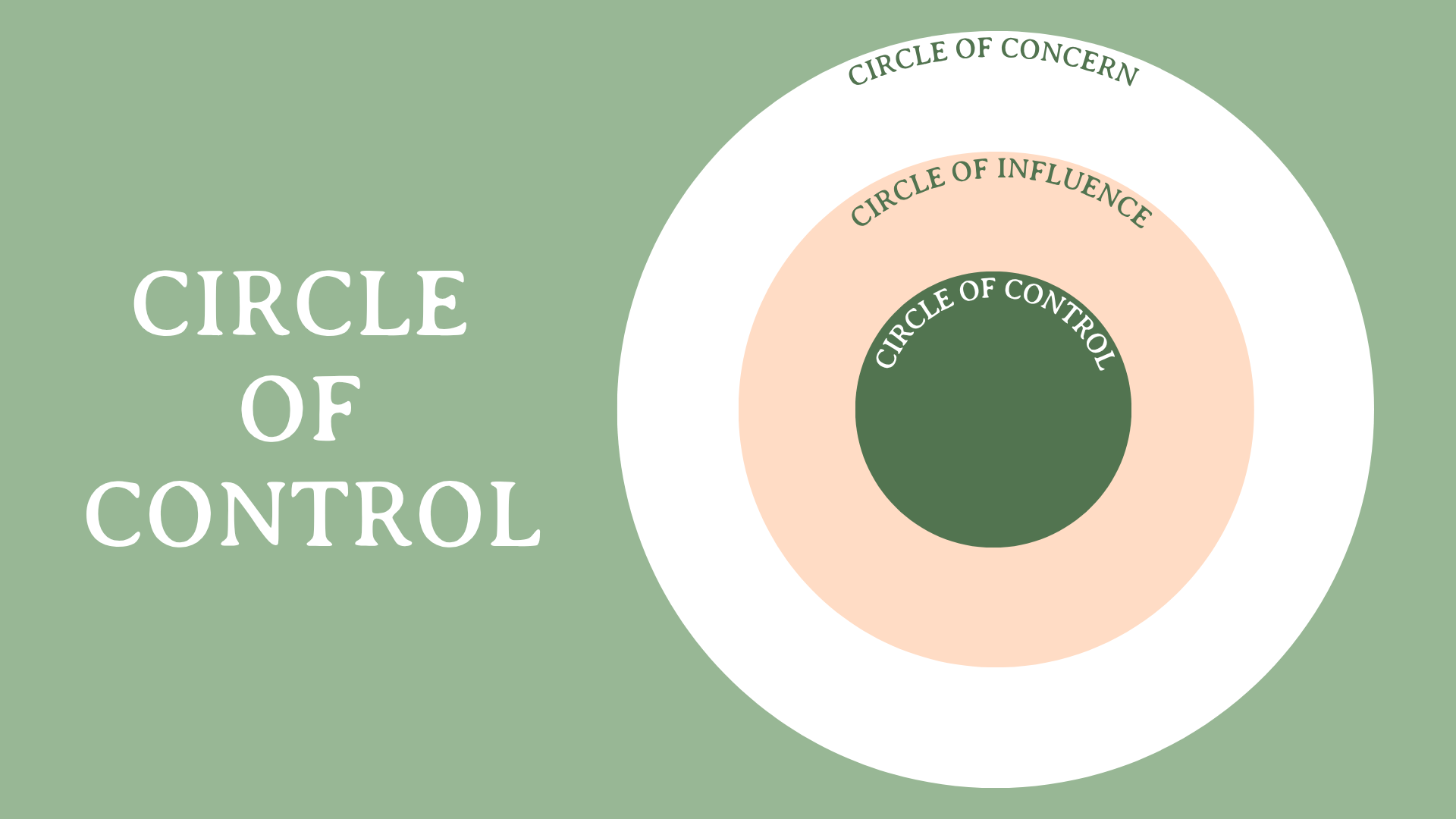
What have you “had it” with?
Circle of Concern: Road construction, capitalism, patriarchy, bureaucracy, AI, social media companies
Circle of Influence: Children, friendships, partners, relationships, shared living dynamics
Circle of Control: Self-criticism, insecurity, self-regulation strategies, leaving more time for ourselves, To Do lists, boundaries, worry, cleanliness, saying NO, worry/anxiety, how we spend our time
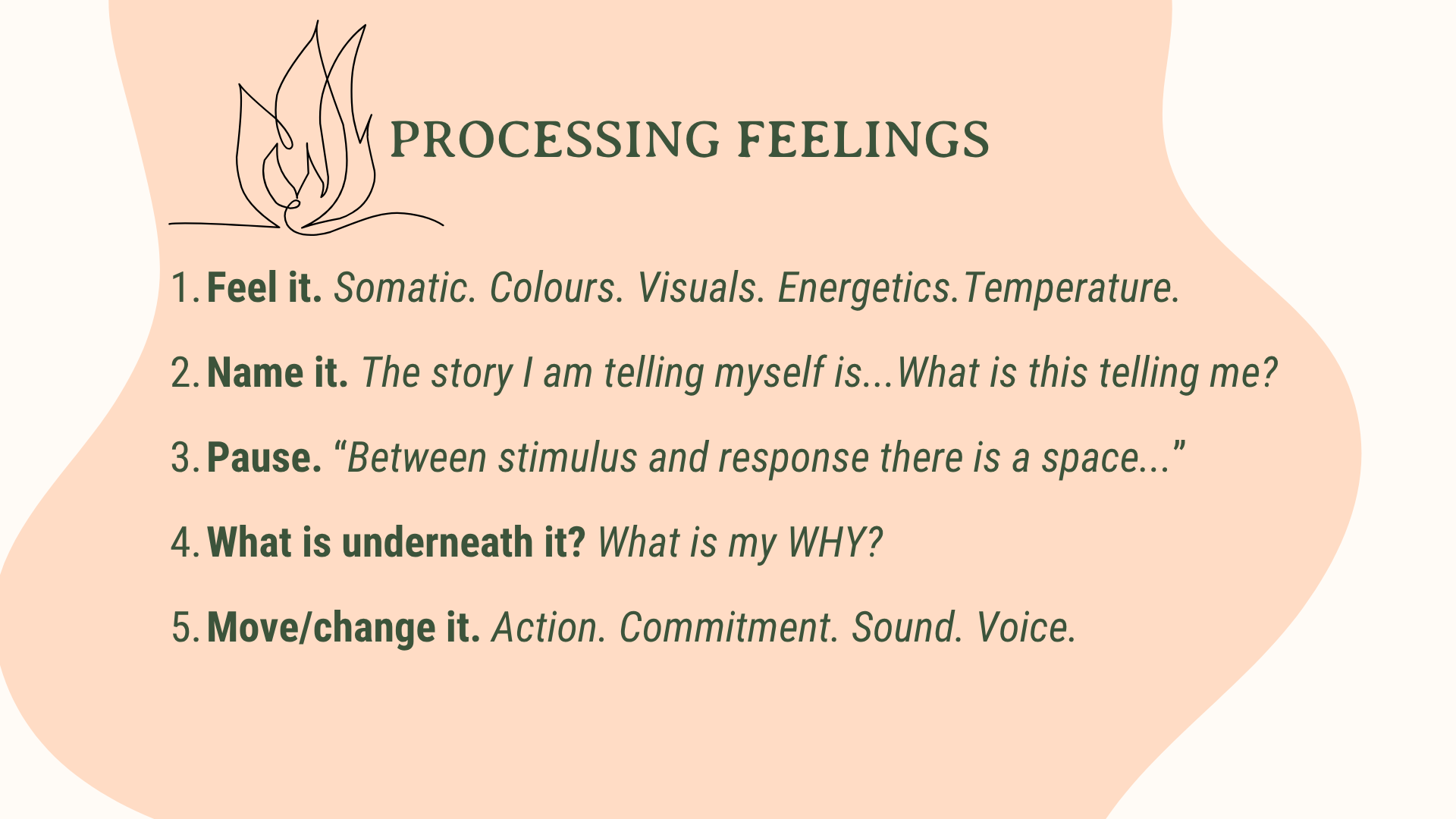
Why feel your feelings?
North American culture tends to overindex towards feeling happy and joyful, so much so that often we shy away from feeling difficult emotions. However, when we bypass, ignore, distract, or redirect into positivity, we don’t get rid of those unwanted emotions. Instead they are internalized and transformed into thoughts and behaviours that assume problematic consequences, like rumination, sleeplessness, and default coping habits (ex. substance use, disordered eating, shopping, doom-scrolling, etc.). Giving ourselves permission to pause, feel, and process our difficult emotions provides us with a path to acceptance and freedom.
Essential Resources

Journal Prompts
When big emotions arise, where do you FEEL it in your body?
What is beneath this current big feeling? What is the WHY? What pattern is this connected to?
Of the the things you’ve “had it” with, which ones are linked to social inequalities and injustice? How can you influence changes to improve this for yourself and for others?
Tools
Additional Info from The Menopause Society:
Menopause & Depression (PDF)
A very informative, evidence-based website: Herstasis Health Foundation
and check out their comprensive exploration of menopause symptoms for detailed explanations and treatments
Videos
How Menopause Affects the Brain (Dr. Lisa Mosconi | TEDTalks)
How Perimenopause Impact Anxiety, Depression, and Panic Attacks (Therapy in a Nutshell | Emma McAdam f. Dr. Mary Claire Haver)
Perimenopause, Menopause And Mental Health (Lewis Psychology | Teresa Lewis)
ADHD in Menopausal Women (Bev Thorogood | TEDxBrayfordPool)
ADHD and Menopause (Understood | Dr. Monica Johnson)
Menopause Mood Swings – Rage, fury, and other intense emotions that made me feel out of control (Herstasis Health Foundation | Women’s Health Initiative)
Mental Load Explained: What Partnership Actually Means (STFUAL | Alessandro Frosali) I don’t have much tolerance for mansplaining except when it is for men by a man…
Podcasts
Menopause, Misogyny and the Medical System: Dr Sharon Malone Sets the Record Straight (Unpaused | Dr. Mary Claire Haver)
The Menstruality Podcast | Red School (a more spiritual lens on menstruation and menopause - various episodes that you may find interesting)
What Every Woman Should Know About Menopause w. Dr. Sharon Malone (IMO | Michelle Obama & Craig Robinson)
Carrying the Mental Load: How Unequal Cognitive Labour Can Affect Your Relationship with Allison Daminger (Reimagining Love | Dr. Alexandra Solomon)
And finally…if you’re in the mood for taking in US politics, getting activated, and listening to a pair of perimenopausal women take down the patriarchy with a sense of crude humour, I appreciate I’ve Had It | Jennifer Welch & Angie “Pumps” Sullivan
PSWD: +o@sPf0r

Featured Facilitator:
Andrea Ting-Luz,
Clinical Counsellor
I walk in the world as a perimenopausal, cisgender, heterosexual female, a once-divorced and twice-married spouse, an acculturated person of colour, a first-generation child of Chinese-Filipino-Spanish immigrants, an unapologetic feminist determined to include the masculine in the conversation, a staunch ally of the queer and trans community, and an activist committed to disrupting the cycles of violence and intergenerational trauma.
I am a Clinical Counsellor and Yoga Instructor (MACP, RCC - Qualifying, ERYT-500), who earned a Master’s in Counselling Psychology (MACP) with honours from Yorkville University in 2026. I am currently finalizing accreditation as an Registered Clinical Counsellor (RCC) from the British Columbia Association of Clinical Counsellors (BCACC).
I provide counselling services to individuals and couples with a fcous on adults undergoing momentous transitions and related discomfort including peri/menopause, sleeplessness, anxiety, empty-nesting, retirement, career transition, divorce/separation, new love, grief and loss. I benefit from the supervision of BCACC member Frances Kinloch, RCC.
Sources
Brown, L., Hunter, M., Chen, R., Crandall, C., Gordon, J., Mishra, G., Rother, V., Joffe, H., & Hickey, M.(2024). Promoting good mental health over the menopause transition. The Lancet, 403, 969–983. https://doi.org/10.1016/s0140-6736(23)02801-5Garg, R., & Munshi, A. (2025). Menopause and Mental Health. Journal of Mid-Life Health, 16(2), 119. https://doi.org/10.4103/jmh.jmh_61_25
Mervosh, N., & Devi, G. (2025). Estrogen, menopause, and Alzheimer’s disease: understanding the link to cognitive decline in women. Frontiers in Molecular Biosciences, 12, 1634302. https://doi.org/10.3389/fmolb.2025.1634302
Mosconi, L., Berti, V., Dyke, J., Schelbaum, E., Jett, S., Loughlin, L., Jang, G., Rahman, A., Hristov, H., Pahlajani, S., Andrews, R., Matthews, D., Etingin, O., Ganzer, C., de Leon, M., Isaacson, R., & Brinton, R. D. (2021). Menopause impacts human brain structure, connectivity, energy metabolism, and amyloid-beta deposition. Scientific Reports, 11(1), 1–16. https://doi.org/10.1038/s41598-021-90084-y
Mueller, S., De Franceschi, M., Brzozowska, J., Herman, A., Ninghetto, M., Burnat, K., Grymowicz, M. & Marchewka, A. (2024). An influence of menopausal symptoms on mental health, emotion perception, and quality of life: a multi-faceted approach. Quality of Life Research, 33, 1925–1935. https://doi.org/10.1007/s11136-024-03641-z